Description
A-C Series Battery Chargers – Advanced Switching Technology for Reliable Battery Charging
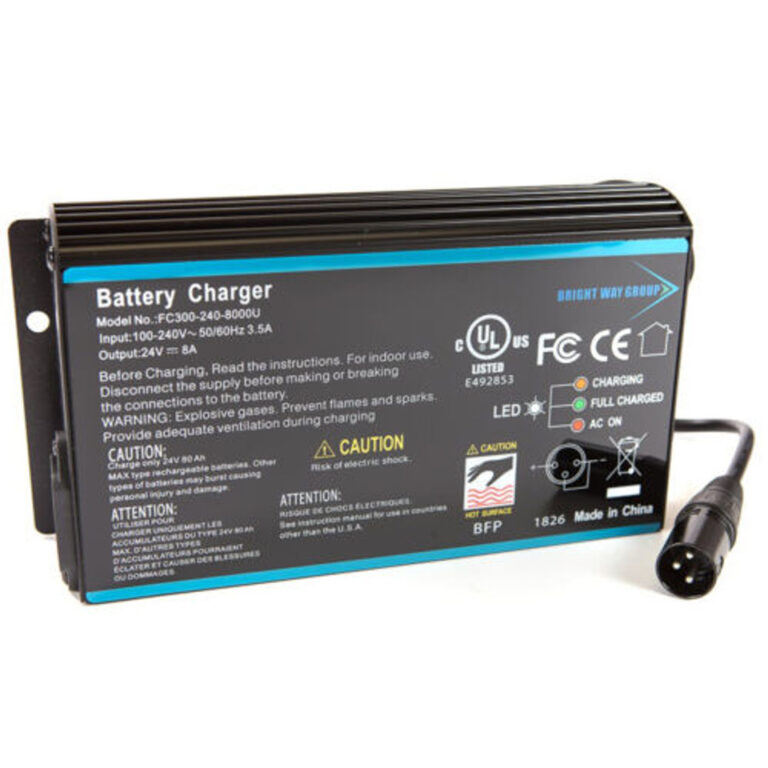
The A-C Series Battery Chargers are switching-type battery chargers designed to provide controlled, efficient charging without relying on traditional transformers. Instead, integrated circuits regulate both current and voltage throughout the charging process, allowing the charger to automatically transition from a higher fast-charge voltage to a lower float-charge voltage as the battery approaches full capacity. This design makes the A-C Series particularly useful for cyclic applications where dependable recharge performance and proper charge termination are important.
By automatically adjusting the charging stage, these chargers help support consistent battery performance while reducing the need for constant supervision. Once the battery reaches the appropriate float voltage, it can safely remain connected to the charger indefinitely under suitable operating conditions. This makes the A-C Series battery charger a practical choice for applications where equipment needs to be recharged and kept ready for its next use.
How A-C Series Battery Chargers Work
Traditional chargers often rely on transformers to control electrical output. The A-C Series takes a different approach. These are switching battery chargers, using integrated circuits to monitor and regulate charging current and voltage.
During the initial charging period, the charger supplies a higher voltage to help restore the battery’s charge efficiently. As the battery approaches full capacity, the charger automatically changes to a lower float voltage.
This automatic transition is important because a battery does not need the same charging conditions throughout the entire cycle. Maintaining the appropriate float voltage after the main charging process helps keep the battery charged without continuing the high-rate charging stage.
The result is a charging system designed to provide controlled charging throughout the cycle.
Key Features and Benefits
- Switching charger technology: Operates without traditional transformers.
- Integrated circuit control: Regulates charging current and voltage automatically.
- Automatic charge transition: Moves from fast charging to float charging as the battery nears full capacity.
- Float charging: Allows the battery to remain connected indefinitely at the appropriate float voltage.
- Suitable for cyclic applications: Designed for situations where reliable recharge performance is important.
- Controlled charging process: Helps maintain appropriate charging conditions throughout the cycle.
- Supports battery performance: Proper charging can contribute to consistent battery operation and service life.
- Flexible application: Can be used in systems where batteries are charged individually, in series, or in parallel when configured appropriately.
Always verify the charger’s specifications and compatibility with your battery system before use.
Why Switching Technology Matters
The switching design is one of the defining characteristics of the A-C Series Battery Chargers.
By using electronic circuitry rather than a traditional transformer, the charger can regulate electrical output through integrated control components. These components monitor the charging process and adjust the output as the battery’s condition changes.
This provides a more controlled charging cycle.
The charger begins with the higher voltage needed for the fast-charge portion of the process. As the battery approaches full charge, it automatically moves to the lower float voltage.
For cyclic applications, this automatic operation can be particularly useful. Equipment may need to be returned to service quickly after a discharge, and the charging system needs to transition appropriately when the battery is nearly full.
Fast Charging and Float Charging
The A-C Series follows a charging approach that can be broadly divided into two important stages: fast charging and float charging.
During the fast-charge stage, the charger provides the appropriate higher charging voltage to restore energy to the battery.
As the battery becomes nearly fully charged, the charger automatically changes to the float-charge stage. The voltage is reduced to a level suitable for maintaining the battery.
At float voltage, the battery can remain connected to the charger indefinitely, provided the battery and charger are being used within their specified operating conditions.
This feature makes the A-C Series suitable for equipment that needs to stay ready between operating cycles. Instead of disconnecting the battery immediately after every charging cycle, the charger can maintain its charge once the main charging process is complete.
Understanding Battery Recharge Time
Recharge time depends on several factors, including the battery’s capacity, how deeply it was discharged, and the output current of the charger.
For a fully discharged battery, you can estimate the approximate recharge time by dividing the battery capacity in amp hours by the charger’s rated output current in amps. Then multiply the result by 1.75.
For example, a battery with a capacity of 100 amp hours connected to a 10-amp charger would be estimated as:
100 Ah ÷ 10 A × 1.75 = approximately 17.5 hours
This is only an estimate. Actual charging time can vary because the charger output declines during portions of the charging cycle, and battery condition and temperature can also affect performance.
If you know how many amp hours were actually removed from the battery rather than simply knowing its total capacity, use the discharged amp-hour amount in the calculation for a more relevant estimate.
Charging Batteries in Series
Battery configuration can affect how charging works. Batteries are connected in series when the positive terminal of one battery connects to the negative terminal of the next battery.
When batteries are charged in series, the batteries receive the same amount of charging current. However, the individual battery voltages may vary.
This distinction is important because batteries connected in a series string do not necessarily remain at exactly the same voltage during charging.
When working with a series-connected battery system, make sure the charger is specifically designed for the total voltage of the battery string. Using an unsuitable charger can cause improper charging or damage.
Always follow the battery manufacturer’s charging recommendations.
Charging Batteries in Parallel
A parallel battery configuration connects positive terminals together and negative terminals together.
In this arrangement, the batteries are subject to the same charging voltage. However, the amount of charging current received by each battery can vary until the batteries reach a state of equalization.
This differs from a series configuration, where the charging current through the string is the same.
Understanding this difference is important when designing or servicing a battery charging system. The charger must be correctly matched to the voltage and configuration of the batteries being charged.
Supporting Battery Performance and Service Life
Proper charging plays an important role in battery performance. Batteries that are consistently charged using an appropriate charging profile can be better positioned to deliver reliable performance over their intended service life.
The A-C Series helps support this process by automatically controlling the transition from the higher charging voltage to the lower float voltage.
The charger is not simply delivering one constant charging condition. Instead, its electronic control system adjusts the charging process as the battery approaches full capacity.
This makes the charging system particularly useful for cyclic equipment that experiences repeated discharge and recharge cycles.
A Practical Choice for Cyclic Applications
Cyclic applications require batteries to repeatedly provide power, become discharged, and then recharge before the equipment is used again.
Examples can include equipment that operates in regular cycles where recharge time is an important part of the overall workflow .visit the official Quantum Rehab makers site
The A-C Series is designed with this type of use in mind. Its automatic charge termination and float-mode operation help create a charging process that can continue without requiring the user to manually switch between charging stages.
When recharge time matters, selecting a charger with an appropriate output current for the battery is essential. A higher-rated charger may reduce the estimated recharge time, while a lower-output charger will generally require more time.
Always make sure the charger’s output is appropriate for the specific battery and application.
Choosing the Right A-C Series Charger
Before purchasing an A-C Series Battery Charger, compare the charger’s rated output with your battery’s voltage and capacity. Also consider whether your batteries are connected individually, in series, or in parallel.
Recharge requirements can differ significantly depending on the configuration.
You should also consider how frequently the battery is discharged and how quickly it needs to return to service. Understanding your actual amp-hour usage can help you estimate charging requirements more accurately.
For specialized battery systems, always confirm compatibility with the battery manufacturer’s specifications and the equipment manufacturer’s charging requirements.
Get More From Your Battery Charging System
The A-C Series Battery Chargers use switching technology, integrated circuit control, automatic charge-stage transition, and float charging to provide a controlled approach to battery maintenance.
Their ability to move from higher fast-charge voltage to lower float voltage helps make them suitable for cyclic applications where batteries need dependable recharging and may remain connected after reaching full charge.
Understanding recharge calculations and battery configurations is equally important. Whether batteries are connected in series or parallel, the charging characteristics are different, so the charger must be correctly matched to the system.
For applications where battery readiness, charging control, and long-term performance matter, the A-C Series offers a practical charging solution designed around automatic operation and regulated charging.
you may also like some of our products:






Reviews
There are no reviews yet.